kafka [b99d51cf]
Tags: Computers
1. Kafka Debugging
1. Kafka Debugging
- CP kafka has tools installed under
/usr/local/bin -
Example:
/usr/bin/kafka-run-class kafka.tools.MirrorMaker --consumer.config source.config \
--producer.config dest.config \
--whitelist '.*'
-
Can check consumer status with
  /usr/bin/kafka-consumer-groups --bootstrap-server <server:9092 --describe --group notification
  # or
  /usr/bin/kafka-consumer-groups --bootstrap-server <server>:9092 --list
2. SmallRye (java)
2. SmallRye (java)
-
Framework that abstracts over multiple queues, allowing you to send to multiple kafkas
3. Design
3. Design
3.1. Producers
3.1. Producers
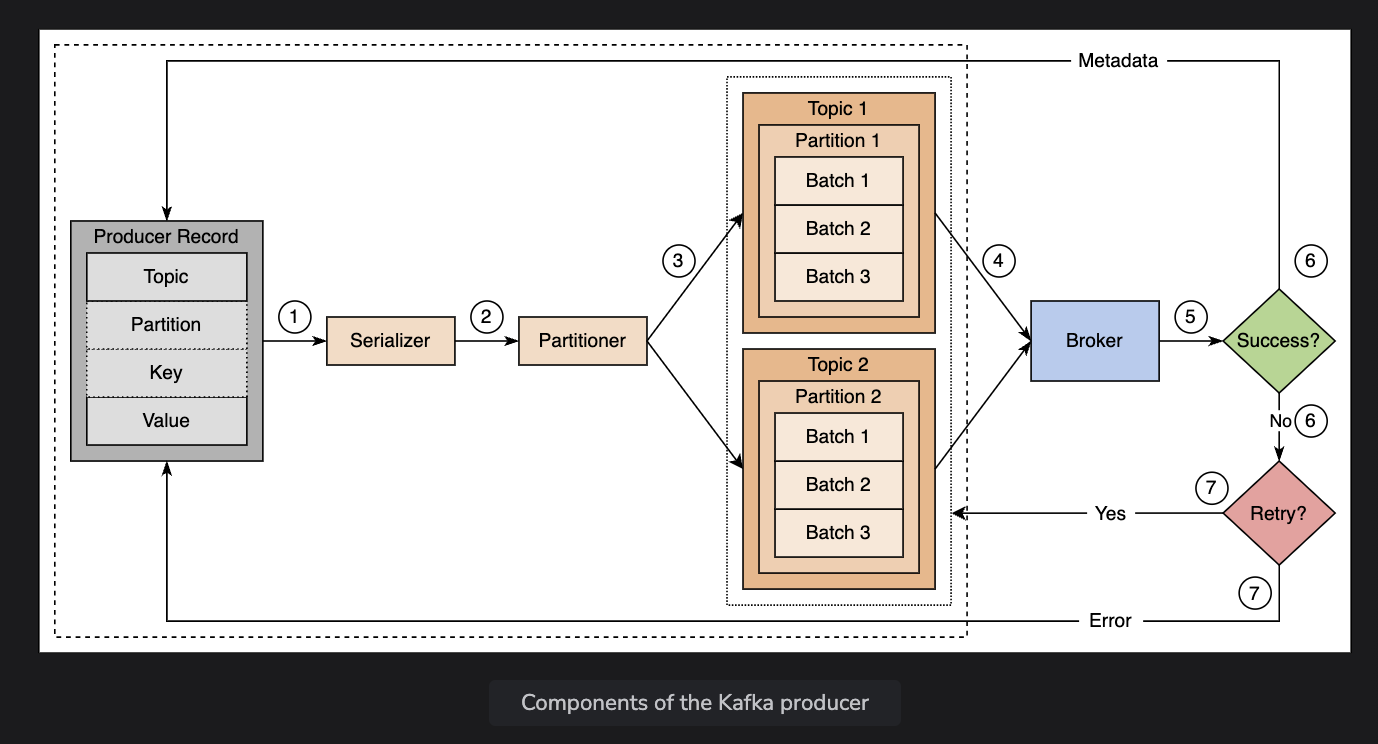
- Producer makes new messages
-
Components
- Producer record: a record is kept for each message created, made of
<topic>, <key/partition>, <value> - Serializer: first thing a producer does to a message is to serialize the data into byte arrays
-
Partitioner: after serialization, it returns the parittions of a specific topic where the message should be assigned to. If there's a key, it uses a hash function on the message key (CRC32)
- If it's a partition, it just assigns it to that partition
- Producer record: a record is kept for each message created, made of
- Default is one partition for each topic.
- Producers already know which topic and partition the message should be written to, and sends it to the appropriate broker
3.2. Broker
3.2. Broker
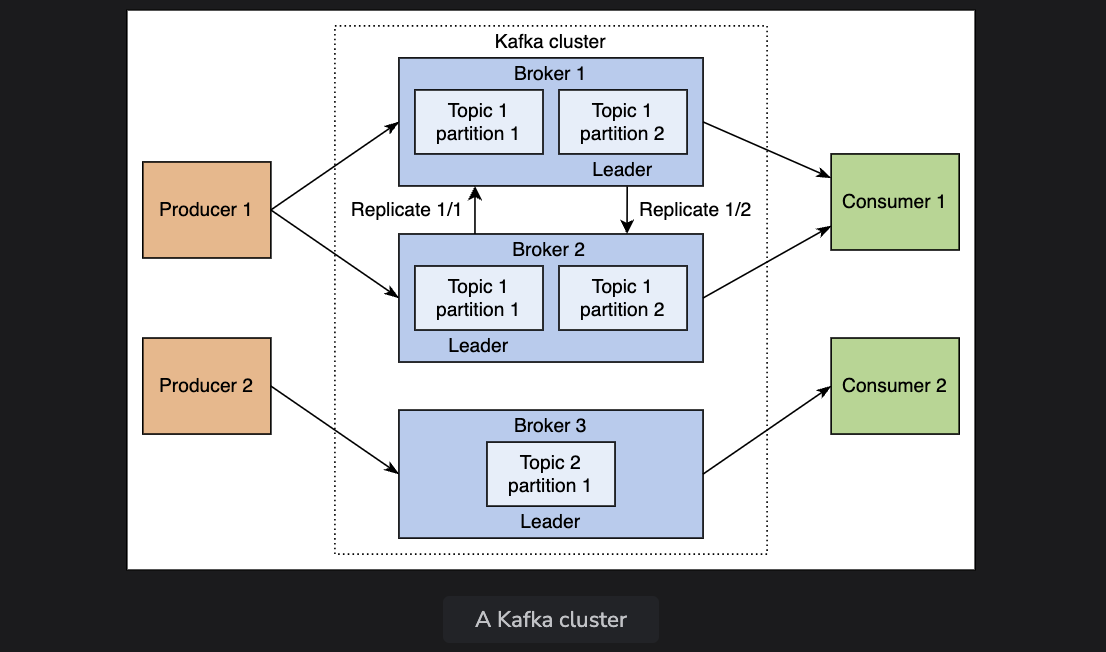
- Workers in kafka, which assign offsets to each message and stores them on disk
- There's a cluster controller, elected via Paxos from Zookeeper, now raft, which is responsbile for assigning partitions to brokers, elects partition leaders, and monitors broker failures
- Since there's multiple brokers, it allows you to scale horizontally.
- Tunable replication across different brokers
3.3. Consumers
3.3. Consumers
- Consumers organize themselves into consumer groups, which are keep the offset of the last ACKed message
3.4. Efficiency
3.4. Efficiency
3.4.1. storage layout is simple
3.4.1. storage layout is simple
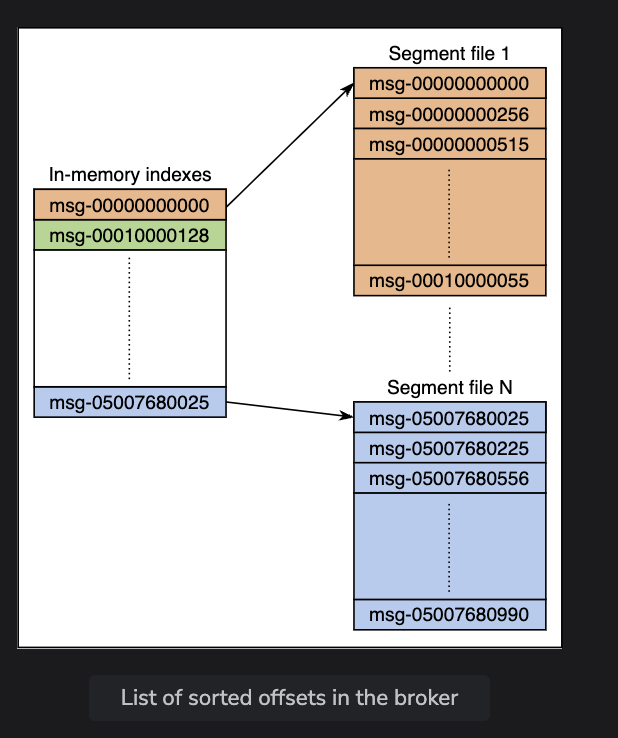
- a partition is "just" one big file, really a logical log that comprises a set of segement files approximately the same size.
- new messages are appended to the end of the file, and there's some metadata that tracks the offsets each table has (similar to a sstable)
-
Similar to blocks on datastores, you can just delete old chunks of logs as they expire
- every message has its id, but internally kafka addresses each message by it's logical offset
- when aconsumer sends a pull request to a broker, the broker keeps a data buffer ready for consumption. The broker then proceeds to read off of the different segements
3.4.2. Efficient transfer
3.4.2. Efficient transfer
- Data flows in batches, producers can dispatch multiple requests and consumers can ack batches back
- Aggressively caches the data in RAM via the filesystem
-
for subscriptions, kafka uses a
sendfilesyscall that bypasses the application/kernel buffers by copying directly from one fd to another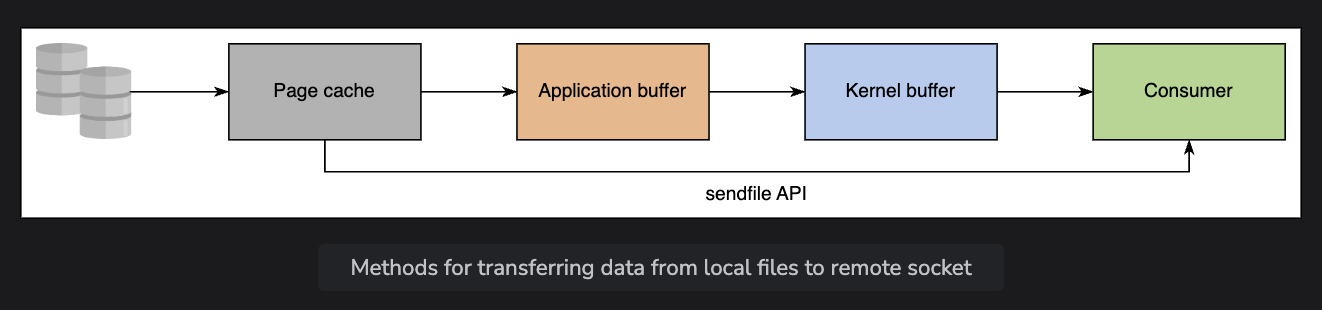
3.4.3. Stateless broker
3.4.3. Stateless broker
- Consumption done by the consumer state is held in ZK, which helps in case of consumer failures.
- Kafka's usage of time based SLA's (rentention time) is what allows the brokers to delete messages even when the consumer hasn't acked it
- Consumers can also rewind, as it allows you to go back on offsets if there's errors
3.5. Distributed coordination
3.5. Distributed coordination
- Partitions are the smallest unit of parallelism, and those need to be consumed by a single consumer
- No specific manager nodes
-
Zookeeper is responsible for keeping track of
- addition or removal of consumers and brokers
- registers consumers and brokers by creating emphemeral nodes
- all the brokers try to create an emphemeral node called a controller, but only one succeeds. The first one is the leader
- Rebalances processes in case brokers or consumers are added or removed
- Maintain the consumption from brokers and track the offset of the last consumed messages of a partition
-
ZK registries
- Consumer registry - saves information in the consumer registry whenever it starts, has consumer group and subscribed topics
- Broker registry - saves information in the broker registry, has the hostname, port, and set of partitions
- Ownership registry - which consumer id is consuming from a specific partition
- Offset registry - stores info related to each subscribed partition
-
Rebalancing has to occur when a consumer or producer dies, but this means that message delivery has to stop
- During rebalancing, different consumers have to take ownership of different partitions that are being read from. This means that they create ZK nodes to track them
3.6. Delivery guarnetees
3.6. Delivery guarnetees
-
At-least-once delivery
- default, delivers each message once to each consumer group.
- Post rebalancing, just continue reading from the last offset
-
Exactly once
- We can use unique keys in the messages and write the results to a system that supports keys
- Records and offsets can be saved somewhere else to dedup on the client end
-
In-order delivery
- Kafka guarnetees that messages in a partition are delivered in a specific order
- No guarentees across multiple partitions
-
Fault tolerance
- Avoids log corruption with CRC checks on the created logs
-
Also replicates the partitions between different nodes
-
Replicas that do not lag are called in-sync replicas
- considered to be replicas that have sent a heartbeat to ZK in the last 6 seconds (user configurable)
- replicas that fetched messages from the leader in the last 10 seconds (user confiugurable)
-
3.7. Design Wisdom
3.7. Design Wisdom
- Uses unconventional design, such as brokers not keeping state and not guarenteeing cross-partition ordering, but this pushes users to think more about parellism
- Key thing is that brokers do not keep state, state is kept in ZK