sectionPaging [812ab3d6]
- Page sizes traditionally 4kb, but really if you're a big boy we're all huge pages now
- There's a page table, and we represent the address space of the program and how it's mapped into the actual ram
-
One of the bigger issues with paging is that storing the page table and all it's constitutant information can get quite large. So we avoid mapping all the pages
- When a process generates a virtual address, the OS and the hardware have to make it a meaningful real address
- note that if we store page tables in memory, hitting RAM would be prohibitively slow, so we do a TLB
- page table entries change logical memory spaces into physical spaces, how they ordered, how they used, varies widely
- you don't have to map all the pages, but if they're not in ram, where are they?
- kernel allocates the pages, and mapped when a program is loaded at execute time
-
shared libraries (shared among various processes, chances are .so pages are already in RAM, so they map to another process address space)
- although now static binaries might be good enough since we have tons of ram now
-
context switching doesn't involve memory changes
- means switching to different address spaces and different page tables
- address spaces can sit all in memory with enough ram, just change the register values, no freeing memory
- pages are copied out to swap (AND HIT DISK)
- reason why it's called "swap", to swap processes between context switches
- now you just move the pages out as you need to
-
typically a disk partition or a file, and we can have multiple swap spaces
mkswap(8)andswapon(8)-
swapon -sin terms of unix blocks- unix blocks are 512 bytes, each block is half a K, although now there's different
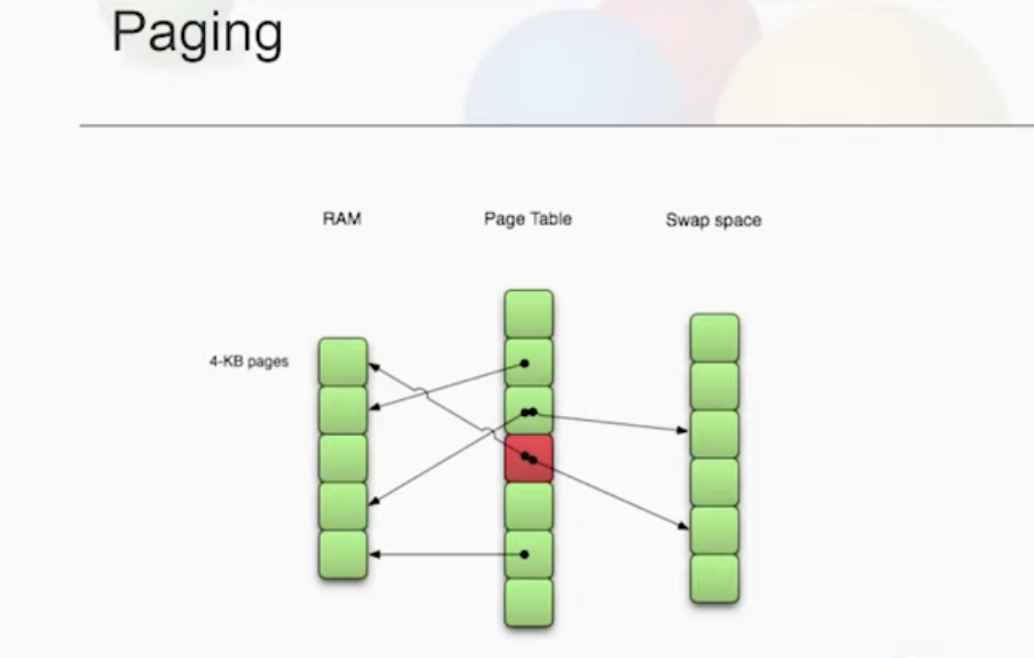
- Possible to have memory on the swap space and in memory!
-
"dirty page" - means that one copy that has been created is not the same as a the one in swap anymore
- dirty pages need to reswap out
- A "page fault" happens when you hit something that is not in RAM, which triggers a copy back from swap
- happens on demand, which means paging in and out requires a very long wait
- page ins are synchronous! the worst case
-
Linux KPTI:
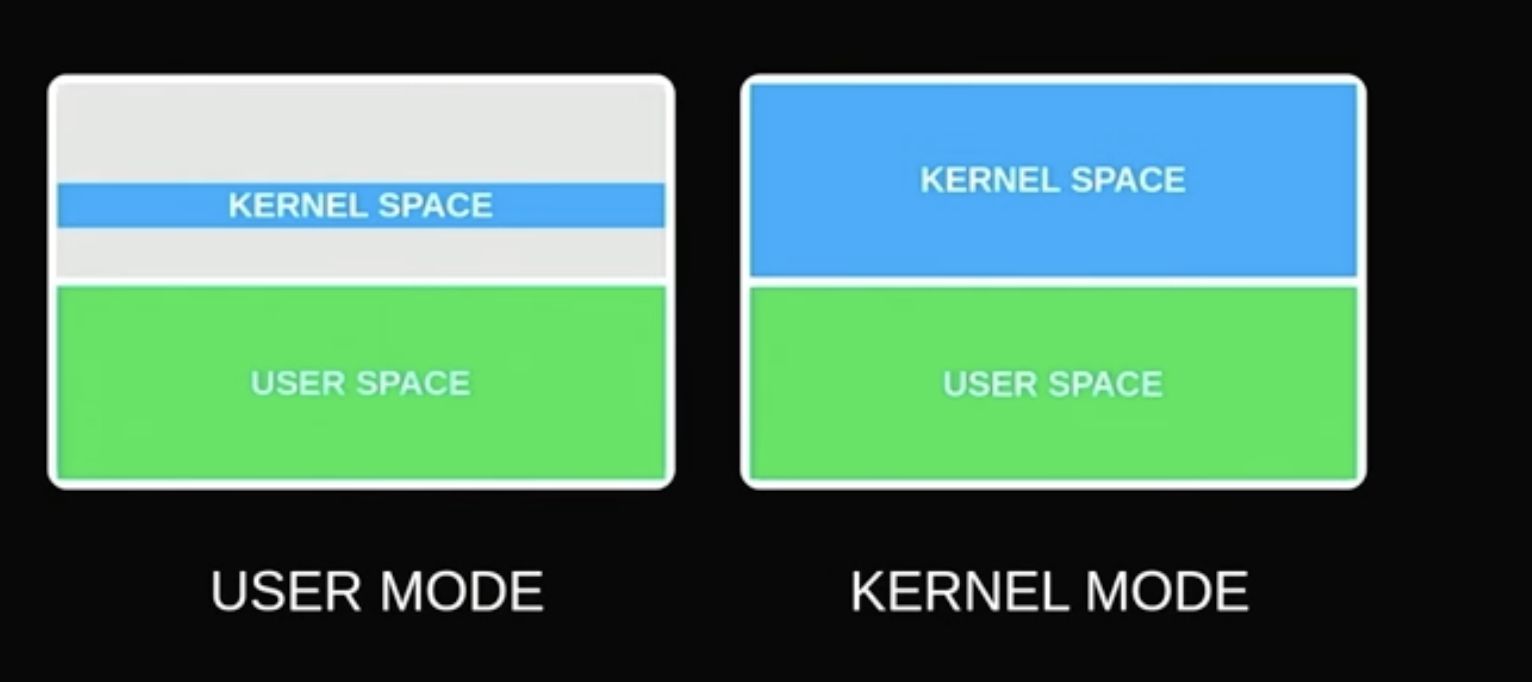
- separate page table, isolates user space and kernel space (against Meltdown), 5-30% performance degredation, causes partial TLB flushes
pmapgets you memory mappings
1. ASLR
1. ASLR
- Where is it controlled?
/proc/sys/kernel/randomize_va_space
2. 48 bit addressing
2. 48 bit addressing
-
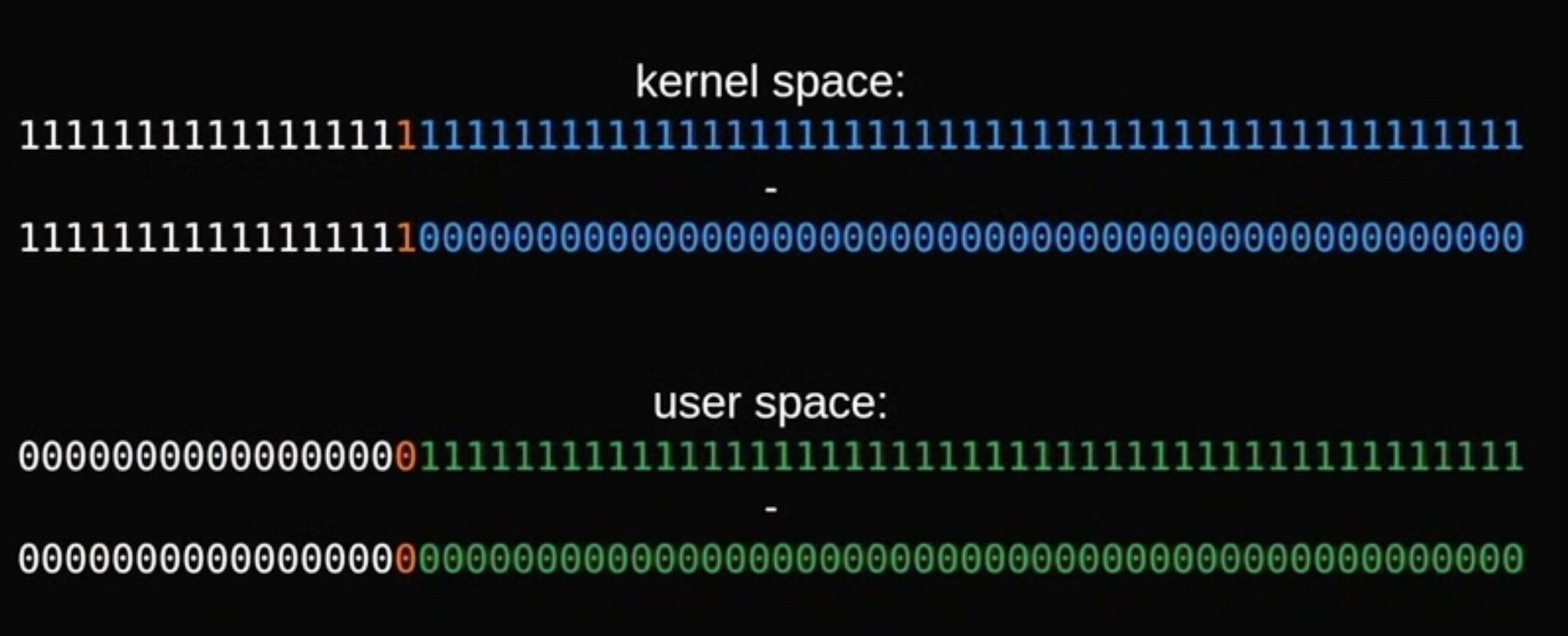
Linux uses the most significant bit for distinguishing between kernel space and user space (read.seas.harvard.edu/cs161/2018/doc/memory-layout/)
3. pgd, pud, pmd, etc
3. pgd, pud, pmd, etc
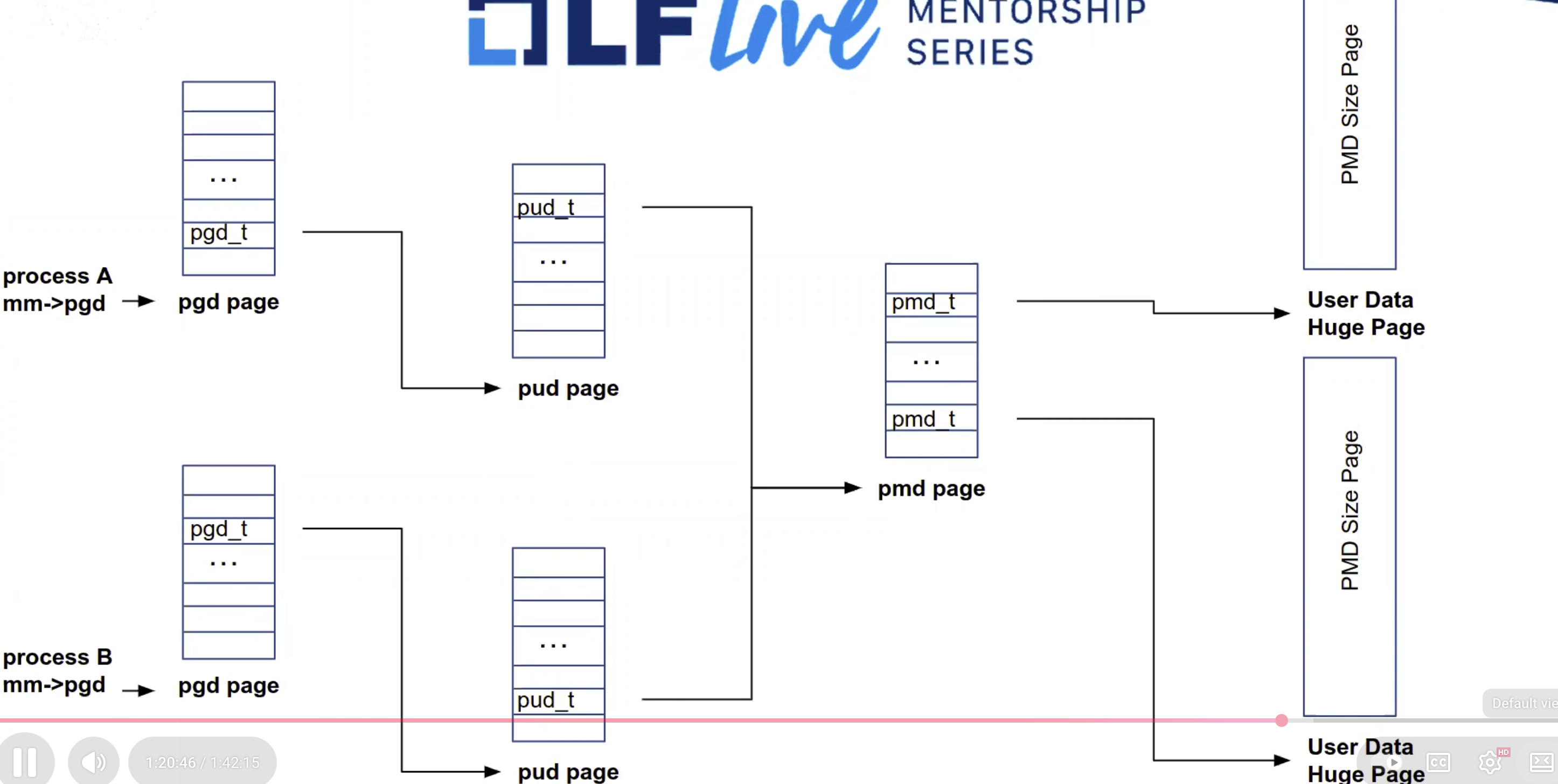
- Different layers of pgd
-
Why do we even have multilevel paging?
- Because we want to reduce the amount of RAM. If we had a single level, the page table would have to be massive, it would have to allocate the whole table.
- Multilevel is a directory of pages
- lwn.net/Articles/717293/
4. Huge TLB (hugetlbfs)
4. Huge TLB (hugetlbfs)
- www.youtube.com/watch?v=n67gCNiKVcw
- hugetlbfs has been used in the past to reduce the cost of memory translation like any hugetlb, but there's some issues
- But this pins memory, we can't swap huge pages to disk, and no THP stalls.
- Transparent Huge Pages can try to act like huge pages, but the merging mechanism can cause CPU spikes and jitter. Same as compaction in LSM trees
- Get default huge page size in
/proc/meminfo - You can populate huge tlb on kernel boot, or at runtime
hugepage_cma-> contigious memory allocator- You can do it at boot time or at runtime, but doing at boot is a lot easier because of fragmentation
- You can mount a hugetlbfs filesystem, and all files in that filesystem are backed by huge pages
- You can't swap or reclaim huge pages, so you just lose them, end up with a SIGBUS
- We can share the PMD entries in the table for hugetlbfs
-
What kind of applications benefit from huge pages specifically?
-
Databases engines
- Original users, they have a shared memory arena that each query process checks, so less memory lookups
-
Java/JVM
- JVM allocates heap as one continuous block. This makes the GC scans faster by having to scan less on memory translation
-XX:+UseLargePages
-
DPDK
- Bypass kernel stack, you need huge pages just for dealing with packet drops
-
AI/ML Training
pin_memory=Truein pytorch speeds up memory usage because you need to shuttle around a lot of data
-
-
What about not huge pages?
-
- Uses
fork()aggressively - Relies on copy on write, but child procesess have to copy the entire page
- Uses
-
webservers
- Not a lot of gain because requests are short lived and memory is already fragmented
-