sectionDynamoDB [3949f1f8]
- Similar to Cassandra, has partition key and sort key
- Can horizontally partition across different nodes, similar to cassandra
- Similarly, need to split a partition when it gets hot
- There's an automated systems that defines a read capacity unit and a write capacity unit. If it exceeds, it splits
- Note that since almost always you have hot partitions
-
Each node has multiple partitions
- Each partition has two buckets, an allocation bucket or a burst bucket
- To handle a read, pick from any bucket
- To handle a write, the node needs to check the token availability of buckets in the nodes of the entire replication group
- There's a global admission control system, where each request router calls to a global token bucket
-
No fixed schema
- composite key created from the partition key and the sort key
hash(partition key), sort key - has secondary indexes like Cassandra
- composite key created from the partition key and the sort key
- Similar to Cassandra
- Automated adaption to traffic patterns, can move partitions around as needed
-
Uses multi-paxos for consensus
- Leader election from multi-paxos
- Write comes in to a laeder,
- Leader prepares to send acceptors containing the WAL to acceptors
- Acceptors acknolwledge the leader's WAL and returns
- Leader will continue to renew lease as long as it is healthy
1. Partitioning
1. Partitioning
- Hot partitions are possible
- Alternatively, when a partition gets too big and needs to be pslit is throughput dilation.
- Bursting a partition means using the unused capacity on co-resident partitions
- Basically dynamo is organized into partitions, which contain collections of sstables. The hash value matches to a partition grouping, which are dynamic. Multiple partitions can be on the same machine, and bursts can be humored with
-
Meaning there's a problem of workload isolation on the co-resident partitions, we must find a way to maintain bursts (aka load balancing)
- Token buckets!
- When a node recieves a request, it checks for the available tokens in the allocation bucket.
- If there's no space available, it checks the burst bucket
- This allows it to smooth out traffic
-
Scaling this out, we can create a global admission control
- Central master
- Tracks the consumption of a table using tokens
- Request routers maintain local token buckets
- Request routers communicate to the GAC for new tokens
- All GAC servers are tracked by the GAC on an independent hash rings
- Request routers manage tokens and keep deducting tokens as they accept requests
- GAC estimates global token consumption using the information
- GAC allocates tokens that are available
- Basically this is the equivilant of having a QPS measurer
2. Replication
2. Replication
- WAL's are used, but actually data replication is pretty slow
- Solved with log replicas, just replicate the logs themselves (metadata operations) rather than the whole memtable
-
Silent data errors
- Hardware failures can also cause incorrect data writes, so it uses checksums underneath (presumably they have their own filesystem)
3. Availability
3. Availability
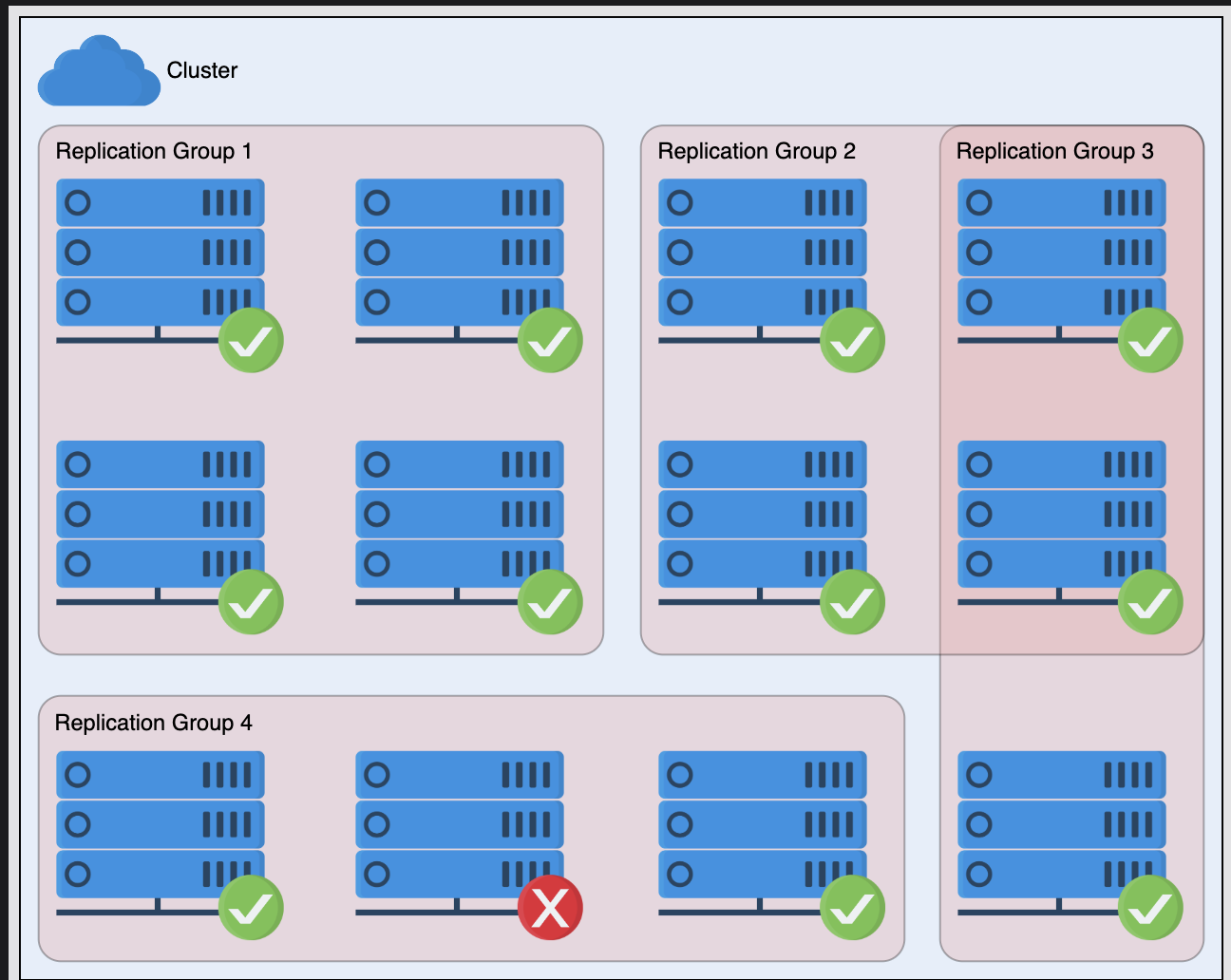
- Similar to BigTable, replication groups are across different sets, and when a replication group is not healthy, the master replaces it
-
Master is done by leader election
-
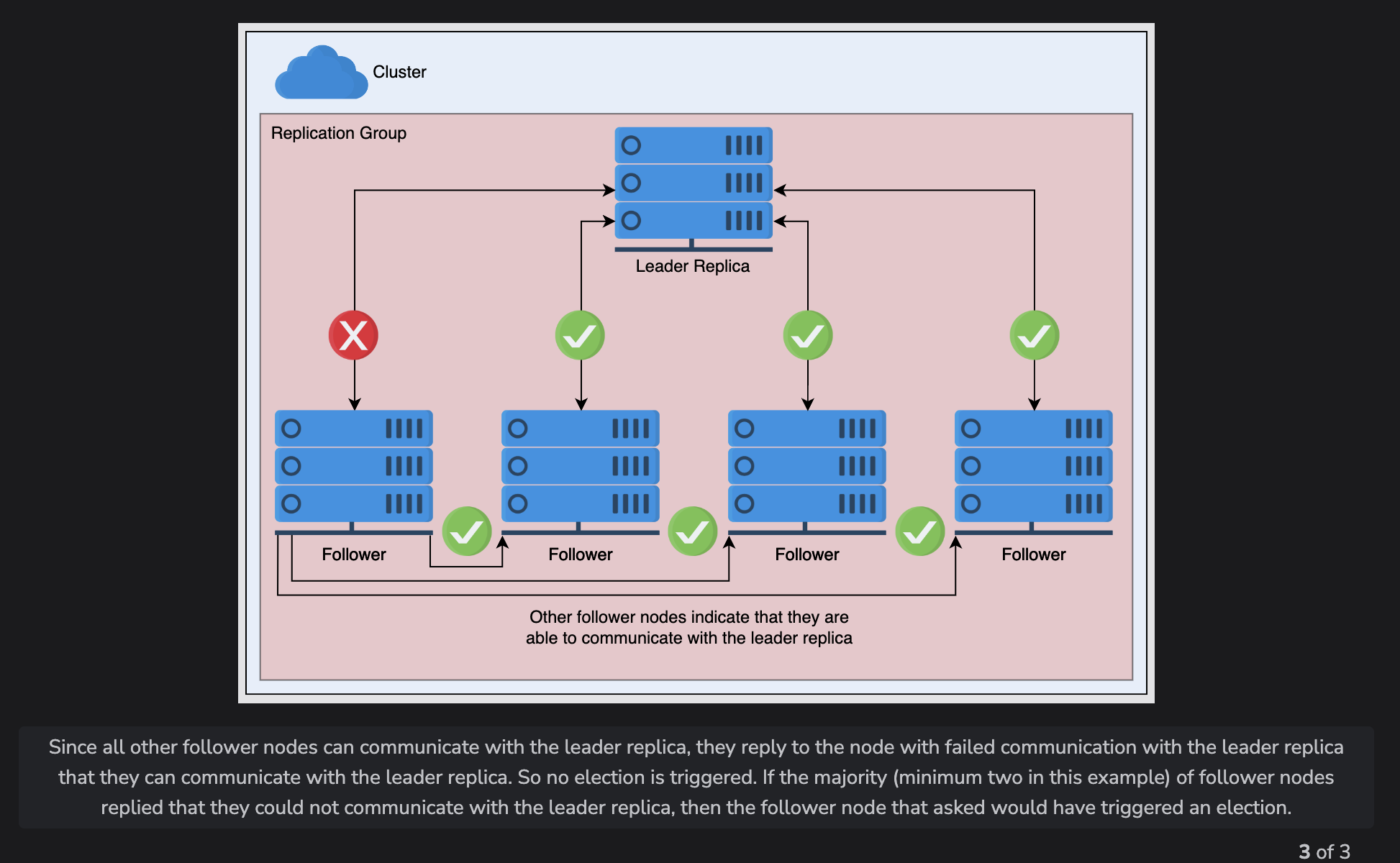
However, sometimes grey failures happen where one node cannot reach the leader. Before it triggers an election, it asks if a quorum of other nodes can reach the leader